Internal combustion engine CFD and combustion simulation consulting
Simulation support for engine development and research: from a single question about one operating point to a multi-year modelling programme. You get an engineer who knows the physics, the numerics and the source code of the models.
What I can do for your engine
In-cylinder flow and mixture formation
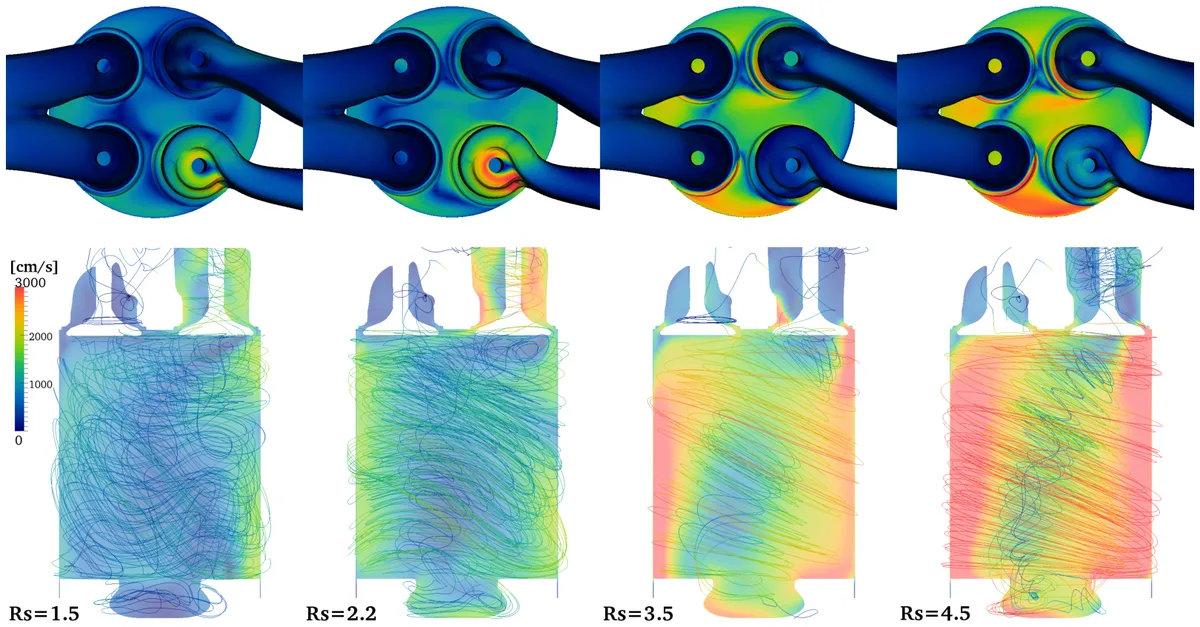
- Intake ports, swirl and tumble
- Piston bowl and combustion chamber design
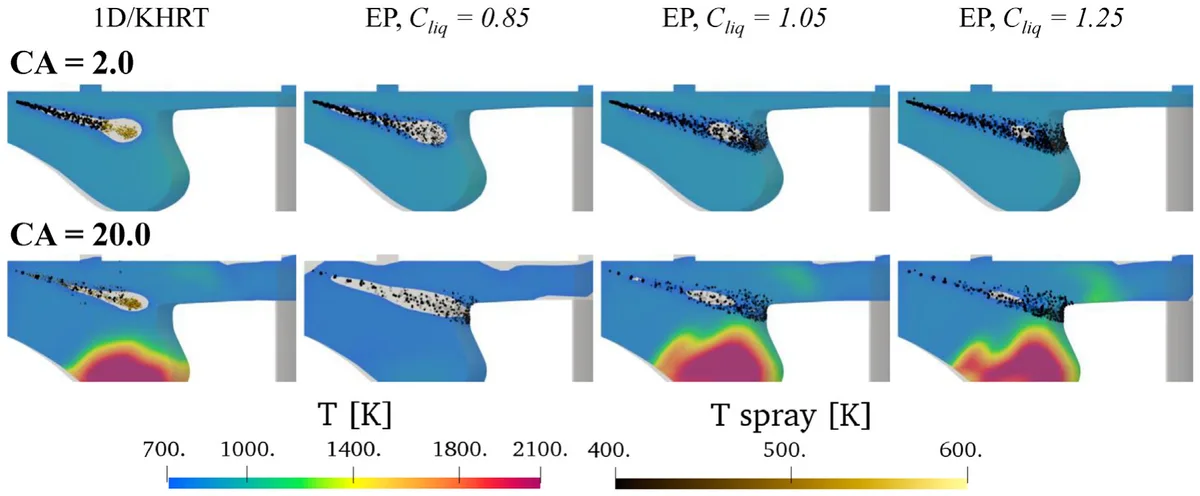
- Fuel sprays, injection strategies, wall wetting
- Turbulence model assessment against measurements
Ignition, combustion and emissions
- Diesel, spark-ignition and dual-fuel combustion
- Low-temperature strategies: HCCI, PPC, RCCI
- Flame propagation and spark ignition, knock
- NOx, soot and combustion noise
Fuels and chemical kinetics
- Hydrogen, ammonia, methane and their blends
- Multi-component and surrogate fuels
- Ignition delay and laminar flame speed tables
- Reaction mechanism reduction and optimisation
Heat transfer and thermal management
- Wall heat transfer and wall-function models
- Heat losses and efficiency analysis
- Lumped-parameter models of cooling systems
- Catalyst heating and cold-start operation
Model development, not only model use
Commercial CFD packages give good answers until the engine leaves the range their models were tuned for: a new fuel, a new chamber shape, a new injection strategy. Then someone has to open the model.
Most of my published work is exactly that: new sub-models and numerical methods, validated against optical engine and spray experiments. I can develop a model for your case, implement it in the code you use (through user-defined functions or directly in the source), and document it so that your team owns it.
- Spray atomization, collision, vaporization and vapor-liquid equilibrium
- Flame propagation with the G-equation and spark ignition kernels
- Sparse, analytical-Jacobian solvers for detailed chemistry
- Non-equilibrium wall functions for heat transfer
- Quasi-dimensional combustion models for fast engine cycle simulation
Confidentiality and IP protection
Proprietary work with industry has to be undertaken with confidence. These are the terms I work under with every client, and they are written into the contract.
- Non-disclosure agreement before the first technical talk. Yours or mine; nothing sensitive is exchanged before it is signed.
- Your data stays yours. Geometry, test data, calibrations and operating conditions are used for your project only, and are returned or deleted at the end if you ask.
- You own the deliverables. Reports, results and the models developed for you under the contract are assigned to you.
- No publication without written consent. I never show a client's results, name or pictures in a paper, a talk or on this website unless the client approves it in writing.
- Projects are kept apart. Each client has separate storage and separate code branches. What I learn about your product is not carried to a competitor.
- Clear ownership of tools. My own pre-existing software stays mine and is licensed to you where the project needs it; this is agreed up front, so there are no surprises later.
How an engagement works
First call
A free conversation about the engine, the question and the data you have. Under NDA if needed.
Proposal
A short written scope: what will be simulated, what you receive, the schedule and a fixed price or a daily rate.
Work and reviews
Regular progress meetings with intermediate results, so the direction can change when the physics says so.
Delivery
A technical report, the simulation set-ups and, where agreed, the source code and a hand-over session with your team.
Topics I have worked on
All of these are documented in peer-reviewed papers or SAE technical papers.
- Light-duty and heavy-duty diesel
- Spark-ignition engines
- Dual-fuel natural gas and diesel
- Ammonia and diesel dual-fuel
- Hydrogen and methane blends
- RCCI, HCCI and PPC
- Stepped-lip and dimpled piston bowls
- Pilot and post injection strategies
- Catalyst heating operation
- Combustion noise and soot
- Swirl and port flow
- k-epsilon turbulence models
- Wall heat transfer
- G-equation flame propagation
- Spark ignition kernel models
- Real-gas and multi-component sprays
- Reaction mechanism reduction
- Laminar flame speed calculations
- Parallel computing and solver performance
- Two-stroke and racing engines
Start with a conversation
Describe the problem in a few lines. If I am not the right person for it, I will tell you.